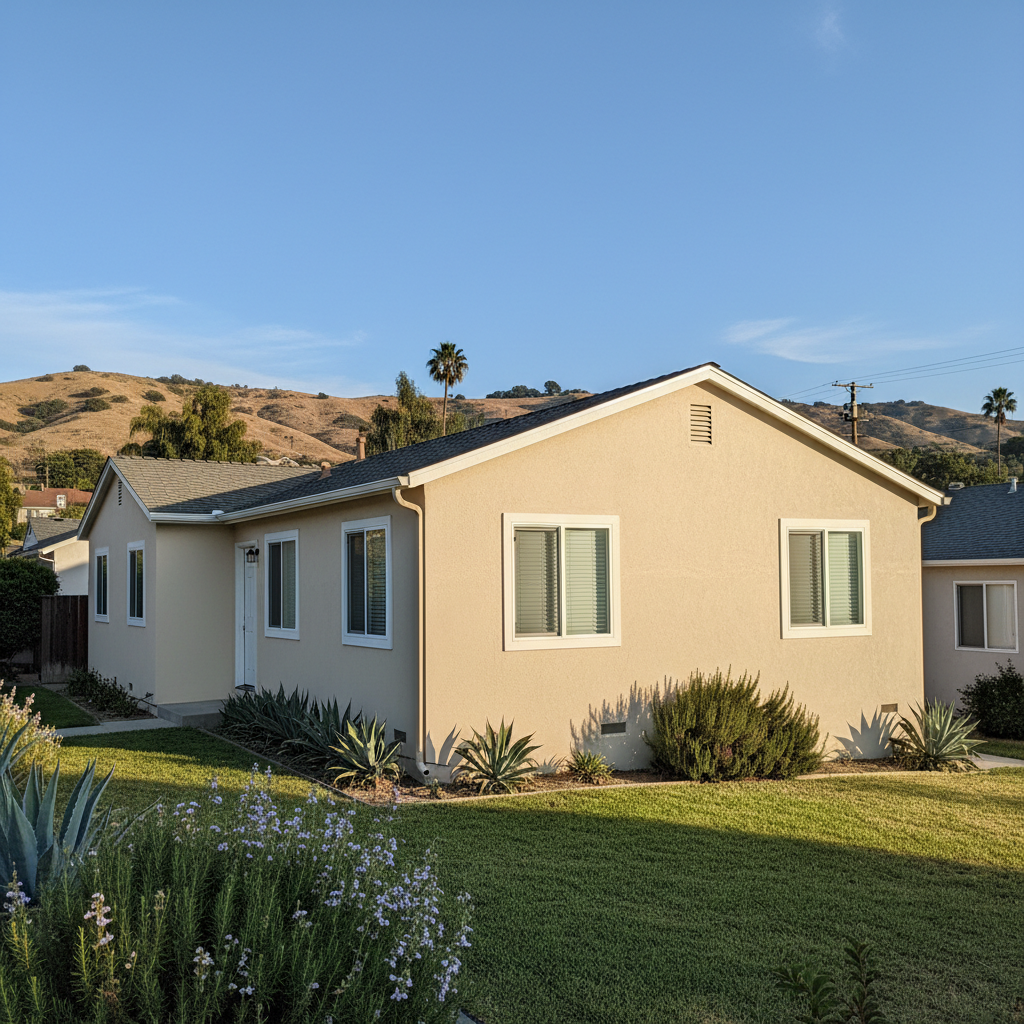
Homeowners want to know what EIFS installation actually costs around Torrance, and contractors should give a straight number instead of the runaround. Most homeowners in our area end up paying between $9 and $14 per square foot installed for a standard drainage EIFS system. For a two-story home down near Riviera Village or an older mid-century rancher off Sepulveda, that total price tag usually lands somewhere between $18,000 and $30,000 for an average-sized house. Torrance Stucco & Plastering does not like playing guessing games with your wallet, so let us break down exactly where that money goes.
What Drives the Price Up or Down?
Not every house in the South Bay is built the same, and your exterior walls dictate a massive chunk of your labor quote. Wall complexity is the biggest hidden cost. If your place has curved archways, multiple corners, or tricky architectural details common in custom builds, expect labor times to stretch out. Material choices also matter. Standard EPS foam insulation boards are cheaper, but upgrading to high-density boards or specialized finishes changes the math. Scaffolding is another factor. Working on a multi-level home requires rigorous safety setups that add to the daily crew costs.
- Wall square footage and overall architectural complexity
- Current condition of the substrate beneath your old siding
- Choice of drainage system versus basic barrier setups
- Scaffolding rentals and site access constraints
What Should Actually Be in Your Quote?
When a legitimate contractor hands you an estimate, it should not just be a single lump sum. A proper quote needs to itemize every single phase of the job. Homeowners want to see line items for demolition and disposal if contractors are tearing off old wood siding or damaged stucco. The estimate has to cover the water-resistive barrier, drainage tracks, insulation board attachment, reinforcing mesh, base coats, and the final acrylic finish coat. If cleanup, trash haul-away, and permits are not explicitly written into the contract, unexpected fees will appear halfway through the project.
How to Avoid Overpaying
Getting multiple bids is important, but do not just automatically pick the middle guy. Look closely at the scope of work. A cheap quote usually means contractors are cutting corners on the drainage mats or using thin, substandard mesh that will not hold up against coastal moisture rolling in off the Pacific. Make sure whoever you hire is licensed specifically for this trade and carries proper liability insurance. Ask them point-blank how they handle window flashings and terminations, because moisture intrusion around openings is where cheap installations fail first. Pay attention to the payment schedule, too. Never hand over more than ten to fifteen percent as a down payment before materials actually land in your driveway.